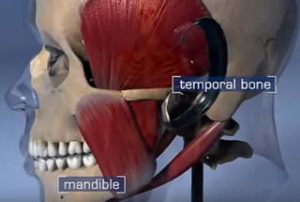
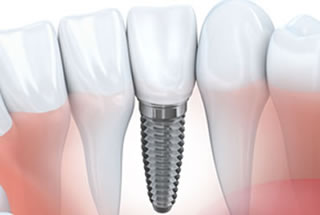
Missing teeth is detrimental not only to your oral health, but your overall health as well. Untreated periodontal disease will worsen and cause infection in the body that can lead to heart attacks, stroke, and other chronic illnesses. Also, when natural teeth are missing, you lose chewing ability, and the jawbone begins to deteriorate which can quickly result in facial collapse. Clearly, replacing missing teeth is important. Dental implants are an excellent solution for restoring your oral health for many reasons:
- Dental implants restore lost teeth so that they look, feel, fit and function like natural teeth.
- Dental implants are intended to last a lifetime when properly placed and maintained.
- Because implants look so natural, you will never need to worry or be embarrassed that your smile looks odd or that your teeth will fall out when you are going about your daily life.
- Dental implants allow you to retain the natural shape of your face and smile.
- The placement of dental implants helps to stimulate bone growth and prevent the bone loss caused by missing teeth.
- Dental implants are cared for exactly like natural teeth.
- Because dental implants function like natural teeth, your speech is never affected like it might be with removable dentures.
- With dental implants, you will be able to bite naturally, allowing you to enjoy all the foods you love with no limitations.
- Implants fuse with your jawbone so that there is no worry your replacement teeth will shift, click or move.
- Because they are placed in the jawbone, there is no damage or impact to adjacent healthy teeth with the placement of dental implants.
Dental implant therapy has an outstanding long-term success rate when compared to other treatments for repairing or replacing missing teeth. Dental implants can provide you with a lifelong solution for a lifetime of healthy smiles.
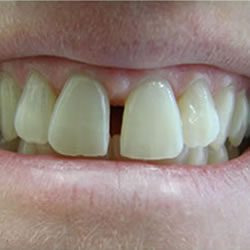
Are cosmetic flaws compromising the beauty of your smile? Thanks to advances in dentistry techniques and technology, you no longer need to suffer from a less than perfect smile. Virtually any issue hindering the appearance of your teeth can be addressed, including:
- Stained or discolored teeth
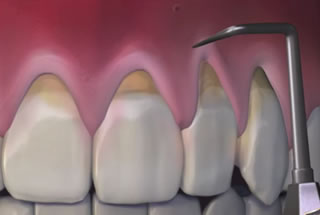
- Receding gums
- Crooked, gapped, misaligned or crowded teeth
- Teeth with cracks or chips
- Decayed teeth
- Missing teeth
- Teeth that appear too long or too short
A qualified dentist can present you with a wide array of treatment options that will not only improve the look of your smile, but also improve the health of your teeth, mouth, and gums. Many treatments can be completed in as little as one office visit, and with proper care, can last you a lifetime. These are just a few of the dentistry procedures that will not only enhance the look of your smile but will also increase the functionality of your teeth and improve your overall oral health:
- Teeth whitening
- Porcelain veneers
- Gum contouring
- Dental implants
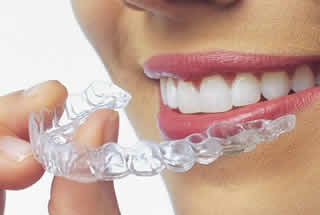
- Braces or Invisalign
- Tooth-colored fillings
- Crowns and bridges
- Gum treatment and reshaping
Your dentist will assess which procedures and treatments would best improve your dental issues, taking into account your general oral health, facial structure, and personal cosmetic goals. If you find yourself embarrassed by the appearance of your smile, consult with a cosmetic dental professional to find out how dentistry can give you a smile you will be proud to show the world.
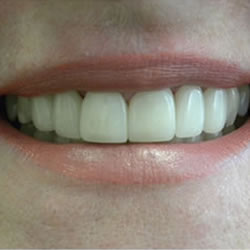
If you are pursuing dental veneers to achieve your smile goals, you need to shop around. Never go to the first dentist you see; always visit at least one other office before beginning your dental veneer procedure. Effective, natural-looking dental veneers are the work of an artistic dentist who will consider your skin tone, hair color, and the shape of your face and lips before creating the perfect veneers for you.
Dental veneers that are too bulky automatically look artificial. They are sometimes called “chicklet teeth,” after the candy, because they look like pieces of gum candy stuck onto the teeth. They will not ever look natural, and can be off-putting.
Poor fit on the veneers can lead to an obvious line at the gums and to swollen, red, irritated gums. Any bleeding of the gums can stain the edges of the veneers, leaving a dark line at the gum line. Improper fit can lead to infection and decay if there is space between the veneer and the natural tooth surface.
Dental veneers that are too long can make the patient look “horsey” and be unflattering. Overly long veneers can also lead to difficulty with bite alignment and gum irritation. Veneers that aren’t long enough can make a patient look old, as though the teeth are worn away with use.
Veneer color and translucency must be chosen carefully, as teeth that are too white don’t look natural. Overly white or shiny veneers do not flatter the face.
Dental veneers should be designed and applied by a skilled dentist. So many factors are at play when choosing color, style and shape of a patient’s dental veneers. Do not go into it believing that it’s just about straight, white teeth. Look for the best dentist you can find. Ask any trusted friends and coworkers if they have a recommendation. It is always better to speak to someone who has had personal experience and to get candid advice.
Do your homework, shop around, and you will find yourself with a smile full of gorgeous, natural-appearing teeth. All anyone will notice is how good you look!
Rumors and exaggerated stories often contribute to the anxiety people feel about visiting the dentist. Taken to the extreme, dental phobia may prevent some individuals from seeking dental care at all. Not only will your oral health suffer without regular exams and professional care, but your overall wellness may also decline. Research has linked poor oral health to systemic conditions such as osteoporosis, increased risk of stroke, pregnancy complications, and Alzheimer’s.
Don’t believe these falsities about visiting the dentist:
Myth: Everything looks good, so my dental health is fine.
Reality: Often, dental problems like tooth decay, gum disease, and oral cancer are initially symptom-less. Routine checkups give your dentist the opportunity to evaluate your whole mouth and look for any unseen issues.
Myth: I feel really nervous and my dentist won’t understand.
Reality: During their education, dentists receive special training on helping patients who experience fear or anxiety. Part of your dentist’s job is making sure you feel safe and comfortable.
Myth: The condition of my mouth is embarrassing, so I can’t see the dentist.
Reality: As a trained professional, your dental provider has likely seen lots of patients with various degrees of problems. If you are concerned about the state of your mouth, you should definitely see a dentist.
Myth: My dental issues will resolve themselves.
Reality: If you had strep throat, you would see a doctor to treat the illness. In the same way, you can’t expect dental problems such as gum disease or tooth decay to clear up without intervention. While over-the-counter preparations and home remedies may ease your symptoms, they won’t address the root cause.
Once you’re an adult, you don’t have to worry about cavities anymore. Right? Wrong! It’s true that you should have mastered oral hygiene techniques, but there are different factors that can contribute to cavities that weren’t a big issue during childhood. What are some of the things that put you at risk for cavities once you’ve reached adulthood, and what can you do about them?
Diet
Often your diet is worse as an adult without even realizing it, and what you eat and drink directly affects your teeth and gums. Sugar is the biggest offender and all types of sugar counts, not just the obvious candy or sodas. Limit your consumption of juices, milk, crackers, sweetened coffee, fruits, and vitamin or energy drinks.
Grazing
Many people tend to “graze” on foods and drinks all day long. If you snack frequently, you’re giving bacteria a constant supply of sugars to mix with and damage your mouth. Even though it’s tempting to sip on coffee or soda all morning, it’s better to drink it in one sitting. Also consider using a straw to avoid your teeth completely.
Receding gums
If your gums pull away from your teeth, your tooth roots can be exposed to plaque. Older patients with gingivitis, or gum disease, are more likely to form cavities. If the roots of your teeth are uncovered, you are more susceptible to plaque buildup and tooth decay.
Previous fillings
Fillings you received earlier in life can contribute to adult cavities. The filling may weaken with time, allowing bacteria into any cracks. Your dentist will check existing fillings for wear and replace them if needed.
Medical conditions
People with lower saliva flow due to various illnesses are at higher risk of cavities. Cancer patients who have undergone chemotherapy or radiation are at more risk, as are smokers. People with limited manual dexterity may be unable to clean their teeth sufficiently.
Ways to decrease your risk
Brush with a fluoride toothpaste after meals, floss daily, and rinse with a fluoride mouthwash. See your dentist twice a year, and also inquire about fluoride treatments.
Kids dentist in Toronto
Professional teeth whitening is one of the quickest and easiest dental treatments for improving the look of your smile. While whitening is a relatively simple procedure, there are some steps you can take to ensure you achieve the best possible results. Following these tips will help you reach your goal of a bright, white smile:
- Schedule a consultation with your dentist prior to whitening. If you have any existing dental problems, have them treated prior to whitening to avoid any side effects or complications.
- Discuss with your dental professional what type of tooth discoloration you have to make certain whitening will work for you. Certain types of intrinsic stains will not be improved by whitening treatments. Whitening also will not work on veneers or dental crowns.
- Schedule a professional teeth cleaning prior to your whitening appointment to remove any build-up of plaque or tartar you cannot remove with home cleaning.
- Start brushing with a desensitizing toothpaste several weeks prior to whitening to limit the sensitivity that can be caused by whitening agents.
- If you are extremely prone to dental sensitivity, check with your dentist about taking a painkilling medication before your whitening appointment.
- Check with your dental office about how much time you should allow for your whitening appointment.
- Avoid eating or drinking anything but water for one hour after the completion of your whitening treatment, and refrain from ingesting foods and beverages that are known stain-causing agents for at least 24 hours.
- Don’t skip follow-up appointments with your dentist, and maintain excellent home oral care habits to extend the life of your whitening procedure.
With a little knowledge and preparation, you can be well on your way to a brighter and whiter smile through professional teeth whitening.


 E-Mail Us
 416-595-5490