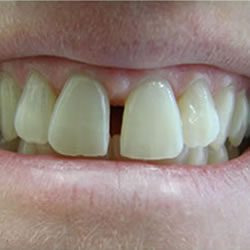
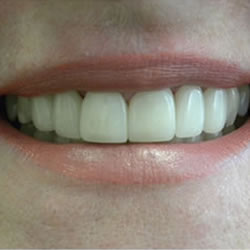
Porcelain veneers are a fantastic option for dental patients to dramatically enhance the look of an imperfect smile. Utilizing thin shells of porcelain that are bonded directly onto the surface of your teeth, porcelain veneers create the look of perfectly even, white teeth.
If you are considering porcelain veneers to treat your dental imperfections, there are some questions to ask your dentist before you begin:
- Do you consider me to be a good candidate for porcelain veneers?
- Can I see an example of how my completed veneers will look?
- How will you choose the color of my veneers?
- How long will the placement of my veneers take to complete?
- Can you explain how my natural teeth will be altered or affected by the placement of porcelain veneers?
- What is the process for placing the veneers?
- Are there any risks or complications related to dental veneers?
- Will you provide aftercare instructions for my porcelain veneers?
- What kind of follow-up is necessary once my veneers have been placed?
- Will my lifestyle be altered in any way after the placement of veneers?
- What is the average lifespan of porcelain veneers?
- What could cause my veneers to need to be replaced in the future, and what does that involve?
An experienced dentist should be able to provide answers to these questions, which will help you to proceed with the placement of your veneers with confidence. Knowing what to expect before, during, and after your procedure will help you to avoid unwelcome surprises and give you better chances for a beautiful new smile.
Routine oral care is vitally important to your entire family. Finding a qualified family dentist is one of the most important things you can do to ensure the health of every member of your family. Because a qualified family dentist is trained to treat all types and ages of patients, choosing a family dentistry practice has some distinct advantages.
A family dentist can provide care for every member of your family, regardless of age or their stage of growth or maturity. From your tiniest baby to your aging parents, a family dentist can provide routine preventative care, as well as treat dental problems.
When choosing a family dental practice, you can save time and hassle thanks to the convenience of taking all of your family to one location. Often, a family dentist will help you schedule all of your family appointments on the same day, at times that work for your family’s busy schedules.
A family dentist provides continuity of care. You will not need to transfer dental records or change providers as your children age. A family dentist knows your family history and develops a relationship with your family over the years that makes it easy to give every member the best care possible.
Today’s family dentistry practices provide a multitude of treatments and procedures to address your family’s specific needs. From annual exams and routine cleanings to dentistry and restorations, your family dentist can provide the care you seek for your family. Finding a qualified family dentist will benefit every member of your family, and help them enjoy a lifetime of healthy smiles.
Find a family dentist in Toronto
Teeth whitening is one of the best ways to quickly and easily boost the quality of your smile. While many patients turn to professional whitening in the dental chair, just as many people turn to products sold over-the-counter. From your local drug store to your grocery store aisles, you can find teeth whitening products. Which one is the best one for you? Here we will take a look at some of the options for at-home whitening.
Whitening products come in everything from toothpastes to flosses to strips to gels. Toothpastes can have natural abrasives that gently remove surface stains, as well as hydrogen peroxide to enhance their whitening qualities. Toothpastes and brush-on whiteners are only minimally effective and must be used regularly over time to ensure best results.
For faster, more noticeable results, whitening strips can make a difference. Whitening strips are best applied to straight, even teeth. If your teeth are misaligned or gapped, you may get spotty results.
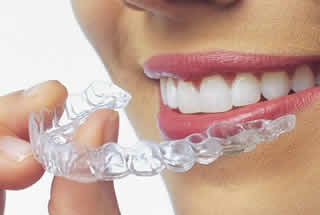
The best at-home results can be achieved with whitening trays. Some kits come with plastic trays you fit to your own mouth utilizing heat. These trays ensure that the whitening product stays in even, direct contact with the tooth’s surface, allowing the whitening products to work most effectively.
Before you whiten your teeth at home, it’s best to have a professional cleaning. Teeth with food debris or plaque will not yield good results. Avoid using products excessively, and only use them as recommended on the packaging, or you could damage your teeth or gums.
Ask your dentist if you have any questions regarding at-home teeth whitening and get started toward the bright white smile you desire!
Wisdom teeth extraction is almost a rite of passage for patients ending their teens and entering into their 20s. In general, it is an extremely common and safe procedure for the majority of people who undertake it, but sometimes things go wrong. Sometimes patients have serious complications “in the chair.” While these complications are rare, they still may happen.
- Some patients have complications from anesthesia. These patients might have a heart attack or a stroke.
- Nerve damage to the lingual nerve can result in permanent loss of taste, numbness or other issues related to speech.
- Permanent numbness in the tongue, cheek or lips can occur.
- Damage to the jawbone may result from accessing the impacted wisdom tooth.
Some patients are more prone to problems with anesthesia than others. Patients with a history of heart problems, seizures or issues with anesthesia should work carefully with their oral surgeon to determine what risks exist and how to combat them.
If you or someone you love is facing wisdom tooth extraction, talk to your oral surgeon today. Find out what plans are in place to treat any patient undergoing a health emergency while undergoing wisdom tooth extraction. Who will be administering the anesthesia? Who will monitor it during the procedure? What hospital has a relationship with this office in case of an emergency? What experience does the oral surgeon’s team have with responding to patients in severe distress? If the patient stops breathing, who will administer CPR or a breathing tube?
You have the right to get answers to all of your questions before surgery. If you aren’t satisfied with the answers, or you feel “brushed off” or disregarded in any way, it’s okay to listen to your instincts and postpone the procedure until you feel more confident in your oral surgery team.
Healthy gums are vitally important to maintaining your teeth as you age. Taking vigilant care of your gums with proper oral hygiene, a healthy diet, and regular dental visits can help you to avoid gum disease and other gum related issues. Some medications and chronic illnesses can also make you more likely to develop gum disease, even if you practice excellent oral care.
Dentists will first attempt to treat patients who have developed periodontal disease with non-surgical methods like scaling, root cleaning, and antibiotic treatment. If these treatments are unsuccessful, and you develop more severe complications, your dentist may recommend gum surgery to treat your gum disease or the resulting complications. Some of the most common surgical procedures to treat the problems that arise from gum disease include:
- Pocket reduction or flap surgery to clean, smooth and tighten the pockets around the base of the tooth.
- Bone grafts to replace bone lost from gum disease and create a base for bone growth.
- Soft tissue grafts to move tissue from the roof of the mouth to gums to add support to the teeth.
- Guided tissue regeneration to stimulate the growth of bone and soft tissues.
- Bone surgery to decrease the depth of holes created by advanced bone loss.
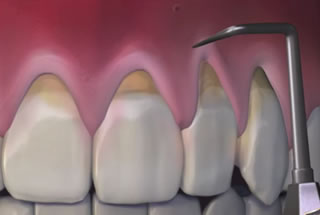
- Crown lengthening to remove overgrown gum tissue from the teeth and make them appear longer.
In most cases with regular exams and proper home oral care, you can prevent periodontal disease from developing to the point of surgery. However, if you find yourself needing surgical treatment for complications that are the result of gum disease, you should consult with a qualified oral surgeon immediately to avoid more severe damage to your oral health.
Oral surgery dentist in Toronto
CEREC stands for Ceramic REConstruction. It is also sometimes called Chairside Economical Restoration of Esthetic Ceramics. This method of computer assisted design and computer assisted manufacture (CAD/CAM) was developed by Professor Werner H. Mormann and Dr. Marco Brandestini at the University of Zurich in 1980. It is a process by which a restorative dentist can construct, manufacture and place individual ceramic tooth restorations in a single appointment. It completely removes the need for a dental lab and multiple appointments. It was first successfully used on patients in 1985.
CEREC involves creating a digital impression from mouth scans using intraoral cameras. Computer software allows the dentist to design the restoration directly on the computer using computer aided design and 3D models. Computer aided manufacturing is used to mill the tooth replacement from a choice of a variety of color-matched ceramic blocks. This is done on-site with perfect accuracy in as little as fifteen minutes using diamond-coated milling units. Dental offices without an on-site milling unit will send the data files to an affiliated dental laboratory.
CEREC is extremely popular and is used by nearly 40,000 dentists worldwide. Up to 7 million restorations each year are completed using CEREC.
CEREC utilizes a wide range of materials. Feldspar and glass ceramics (silicate ceramics) are perfectly suited for single-tooth restorations such as dental crowns and dental veneers in both the front and sides of the mouth. Oxide ceramics are best for milling high-strength dental bridges and crowns and are durable and long-lasting.
Because CEREC technology is so accurate, patient problems associated with poor fit and discomfort are significantly reduced. The need for bulky trays filled with goopy molding compounds that can leave a patient gagging is completely eradicated.
Talk to your dentist in Toronto to see how CEREC can benefit you and your smile goals.


 E-Mail Us
 416-595-5490