You may have heard horror stories of root canal procedures and the pain they produce. If your dentist has recommended root canal therapy for a damaged or decayed tooth, you will be happy to learn root canal pain is a myth. Modern dental technology and sedation techniques make root canal treatment no more painful than having a cavity filled. The best news is you can not only expect a painless procedure, but you can also expect to feel better than ever afterwards.
The pain you feel when a tooth becomes inflamed is caused by an infection. Root canal therapy is performed to eliminate the infected area, hence eliminating the pain. During the procedure, your dental professional will use a local anesthetic to numb the affected area. Some type of sedation may be recommended to calm your nerves and anxiety about the procedure.
You can expect some slight sensitivity of your gums during recovery, and there may be some mild soreness when chewing. This is more common for teeth that are abscessed before the root canal procedure. Avoid chewing on the treated side of your mouth for a few days, and take over-the-counter pain relievers to alleviate any mild discomfort during recovery.
If you have a painful toothache, don’t let myths about root canal therapy deter you from seeking much needed treatment. Talk to your dental professional about the realities of a root canal procedure so you can soon be on your way to a healthier, pain-free mouth.
Root canal dentist in Toronto
An oral surgery procedure may be required for a variety of reasons including:
• Removing impacted or diseased teeth
• Placing dental implants
• Treating facial trauma
• Evaluating and treating pathologic conditions
• Diagnosing and treating facial pain disorders
• Performing reconstructive and cosmetic surgery
• Performing corrective jaw surgery
Should you find yourself in need of oral surgery for any reason, it is always best to know what to expect and how to prepare in order to recuperate effectively. While it is recommended that you consult with your oral surgeon for specific pre-surgery guidelines, these are some basic suggestions for oral surgery preparation that will help you with a speedy recovery. Most oral surgery procedures are outpatient and require general or local anesthesia. With doctor’s approval, you will mostly likely be able to return home shortly after surgery.
To prepare the day before surgery, you should:
• Arrange transportation to and from the procedure so that you will not be driving while still recovering from the effects of anesthesia.
• Do not eat or drink anything after midnight. Check with your dental professional to determine if longer fasting hours are necessary. If you are diabetic, you should eat breakfast.
• Take any prescription medications the night before and morning of surgery with a small sip of water.
• Ask a friend or family member to check on you periodically post-surgery.
• Stock up on chewable, soft foods that won’t irritate your healing gums during recovery.
Again, be sure to consult with your Toronto oral surgeon Dr Cruz prior to the procedure about any specific preparatory guidelines and follow them carefully. With proper preparation and aftercare, you will be on your way to a successful oral surgery recuperation.
Are you are unhappy with the appearance of your smile, but don’t want to deal with the hassle and time required for at-home whitening treatments? Laser teeth whitening treatments administered by a qualified dental professional may be the solution for you to achieve a bright, new smile.
Laser teeth whitening is a professional teeth whitening treatment which utilizes a hydrogen peroxide based gel that is applied to teeth, followed by a special LED light that actives the gel. Oxygen molecules found in the gel will penetrate the tooth structure to remove the stain. The laser actives the gel and speeds up the chemical reaction causing the color change. The use of the light minimizes the treatment time to under one hour.
Traditional bleaching methods required many hours in the dental chair, and often cause pain and inflammation. Unlike traditional bleaching, lasers can target specific areas. Thanks to the laser’s effect on the gel, patients no longer need to keep irritating bleach on their teeth for an extended amount of time. Laser teeth whitening is considered one of the safest and easiest cosmetic dental procedures available.
Results of teeth whitening vary from one patient to another, but you can expect your teeth to lighten 5-10 shades in just one visit. Your dental professional will conduct an examination prior to whitening treatment to determine the shade of your natural teeth and the extent of their staining. They may also suggest undergoing a thorough dental cleaning before the procedure to improve your whitening results.
Contact dentist Dr. Cruz to find out if you are a good candidate for professional teeth whitening. In as little as an hour, you could be on your way to a brighter, whiter smile!
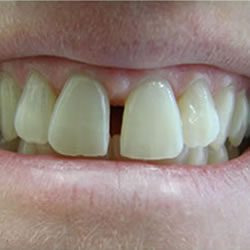
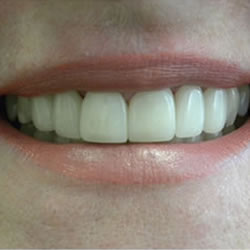
Does your smile have dark stains and imperfections that are unattractive? Your dentist may suggest a procedure such as porcelain veneers. Veneers are shell-like tooth faces typically made of porcelain that are bonded directly onto areas of your teeth that have been shaved down. Lumineers are a particular type of porcelain veneers that are very thin and do not require that your teeth be shaved.
Because your dentist must remove a significant amount of tooth enamel to allow for the best adhesion between your tooth and the veneers, traditional porcelain dental veneers are a permanent choice for your teeth. If they crack or become loose, they must be replaced, as the natural tooth underneath is no longer suitable to function without the cover of the veneer. Because a layer of natural tooth enamel has been removed from your tooth, that tooth may also experience increased sensitivity to hot or cold beverages and foods.
A Lumineer is so thin that it requires little to no removal of your tooth’s enamel – something that appeals to many people – and they are bonded directly to your tooth without any preparation. Should you choose to remove them, you may; however, due to the secure bond to your natural tooth, the process for removal is not easy. Because Lumineers are so thin, they are more prone to cracking than traditional veneers and might not last as long.
Lumineers work best on teeth that are already in proper alignment. If your natural teeth are crooked or crowded and shaping is necessary to reach your smile goals, traditional veneers will be the better choice. As well, if your natural teeth are severely discolored, that discoloration may show through the thin Lumineers.
Neither porcelain veneers nor Lumineers are suitable for patients who have severely decayed or weakened teeth. Patients who grind their teeth or clench their jaws at night are also less suitable to receive veneers or Lumineers, as their veneers may crack, chip, or loosen.
Talk to your Toronto dentist today about the changes you’d like to see in your smile, and what type of veneer best suits you and your particular needs.
Most people have wisdom teeth, but some never erupt or cause problems and others can wreak havoc in your mouth. These teeth, which are the last to develop and usually erupt in the late teen years or early twenties, can cause pain and negatively affect your smile. Not everyone needs to have them removed, but there’s no reason to be afraid if your dentist recommends extraction. This type of oral surgery provides a better experience and outcome than keeping the teeth and enduring problems with them for many years. Most dentists advise wisdom teeth removal for the following reasons.
Overcrowding
Most people’s mouths have enough room for 28 teeth, which is the number of teeth before the eruption of wisdom teeth. That means when wisdom teeth come in, you have 32 teeth trying to fit into your jaw. If your jaw isn’t large enough, the wisdom teeth may not be able to come in properly. This often requires the removal of wisdom teeth so that your mouth fits the rest of your teeth correctly and comfortably.
Pain
Chronic pain near the wisdom tooth may indicate that infection is present. This can occur when food and bacteria become trapped, especially around wisdom teeth that have partially erupted. Tooth extraction will avoid continued infection and pain.
Misalignment
Some wisdom teeth do manage to fully erupt, but they are sideways and negatively affect neighboring teeth. Not only can this result in an unappealing smile, nearby teeth can be damaged by errant wisdom teeth.
Cyst
A cyst may develop in the area around a wisdom tooth if it fills with fluid. This can damage surrounding bone or tooth roots, or even worsen into a tumor that requires more serious surgery for removal.
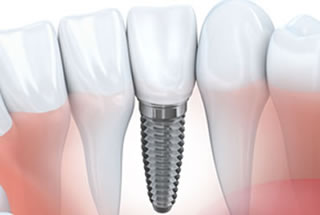
Missing teeth is detrimental not only to your oral health, but your overall health as well. Untreated periodontal disease will worsen and cause infection in the body that can lead to heart attacks, stroke, and other chronic illnesses. Also, when natural teeth are missing, you lose chewing ability, and the jawbone begins to deteriorate which can quickly result in facial collapse. Clearly, replacing missing teeth is important. Dental implants are an excellent solution for restoring your oral health for many reasons:
- Dental implants restore lost teeth so that they look, feel, fit and function like natural teeth.
- Dental implants are intended to last a lifetime when properly placed and maintained.
- Because implants look so natural, you will never need to worry or be embarrassed that your smile looks odd or that your teeth will fall out when you are going about your daily life.
- Dental implants allow you to retain the natural shape of your face and smile.
- The placement of dental implants helps to stimulate bone growth and prevent the bone loss caused by missing teeth.
- Dental implants are cared for exactly like natural teeth.
- Because dental implants function like natural teeth, your speech is never affected like it might be with removable dentures.
- With dental implants, you will be able to bite naturally, allowing you to enjoy all the foods you love with no limitations.
- Implants fuse with your jawbone so that there is no worry your replacement teeth will shift, click or move.
- Because they are placed in the jawbone, there is no damage or impact to adjacent healthy teeth with the placement of dental implants.
Dental implant therapy has an outstanding long-term success rate when compared to other treatments for repairing or replacing missing teeth. Dental implants can provide you with a lifelong solution for a lifetime of healthy smiles.


 E-Mail Us
 416-595-5490