
Appliance Design: Fit & Thickness
Why a custom-fabricated TMJ orthotic at Dr. Yolanda Cruz's downtown Toronto practice is designed for passive fit, palate-friendly thickness, and tongue posture — and how that differs from a generic night guard.
Patients sometimes notice that oral appliances they have used in the past felt tight, bulky, or uncomfortable. These are not trivial concerns — the fit and thickness of an oral appliance have a direct impact on how well it works and whether it causes any unintended effects. At Dr. Yolanda Cruz's downtown Toronto practice, every appliance is designed against the patient's own bite and intra-oral anatomy, with passive fit, controlled occlusal contacts, and palate-friendly thickness as core design principles. Schedule an appliance consultation or call 416-595-5490.
Dr. Yolanda Cruz is a general dentist. All oral appliances described on this page are provided within the scope of general dentistry.
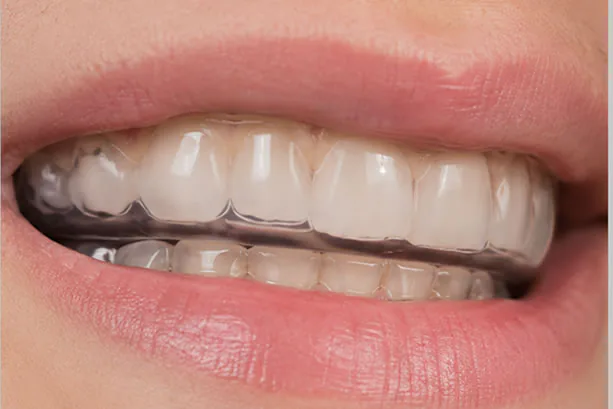
An appliance that's too tight can make TMD worse
Dental plastics shrink slightly as they harden. If this shrinkage is not accounted for during fabrication, the resulting appliance can squeeze the teeth inward, creating subtle but persistent pressure. Even slight pressure on the teeth can trigger increased jaw muscle tension — because the periodontal sensory system surrounding each tooth is exquisitely sensitive and feeds directly into the masseter and temporalis muscles that move the jaw.
The result is an appliance that, ironically, can increase the muscle tension it was meant to reduce. Patients often describe these as feeling "tight," "wedged," or "like the teeth are being squeezed" — and they tend to develop new daytime jaw fatigue or morning headaches within days of starting to wear them.
Appliances at Dr. Cruz's practice are fabricated with a passive fit, meaning that once seated, the appliance applies essentially no pressure to the teeth. It should feel almost like nothing is there. This is achieved by controlled compensation for material shrinkage and by careful intra-oral adjustment of each occlusal contact before the appliance is delivered for nightly use.
Reviewed by Dr. Yolanda Cruz, DDS · Dr. Yolanda Cruz Dentistry On The Path · Toronto, ON
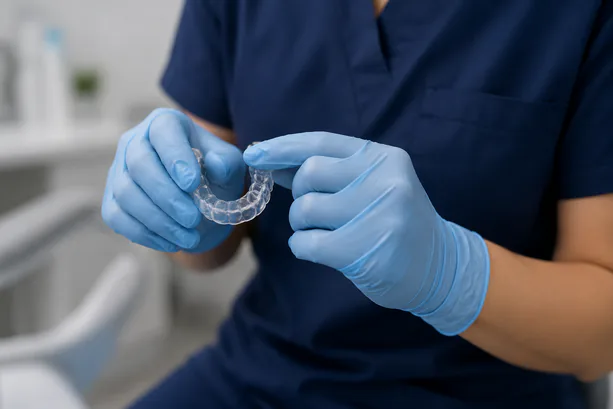
Bulk at the palate pushes the tongue — and the jaw — backward
Excess bulk at the front of the palate, a common feature of commercially made appliances and over-the-counter night guards, can push the tongue backward to make room for the appliance. The tongue, in turn, pulls the lower jaw into a more retruded (backward) position. This works directly against the goals of TMJ treatment, which typically aim to encourage a slightly more forward jaw position for joint protection and airway support.
A backward-pulled jaw also tends to compress the retrodiscal tissue behind the TMJ condyle — the same vascular, innervated tissue we're trying to off-load when we treat a clicking or arthritic joint. Over time, a bulky palatal appliance can prolong recovery or even nudge a patient toward more obstructive sleep-breathing patterns.
Appliances at this practice are made as thin as is structurally appropriate, and a hollow space is incorporated at the front palate area — allowing the tongue to rest naturally against the roof of the mouth during sleep, supporting healthy tongue and jaw posture throughout the night. This is particularly important for patients with overlapping sleep-breathing concerns or the TMJ–airway connection.
Design principles at this practice
Every TMJ orthotic Dr. Cruz delivers is built against an individualized clinical picture, but the design follows a consistent set of principles drawn from the biomechanics and neurology of the masticatory system:
- Passive fit on the teeth — no inward squeeze, no proprioceptive trigger for the jaw muscles to fire
- Even occlusal contacts verified with articulating paper and (when indicated) T-Scan digital occlusal analysis
- Anterior guidance built in so the back teeth disclude in protrusive and lateral excursions — reducing posterior loading on the joint
- Minimum structurally-appropriate thickness — thin enough to stay out of the tongue space, thick enough to resist fracture under bruxism load
- Hollow palatal vault at the anterior palate so the tongue can rest at the roof of the mouth (the "n-spot")
- Smooth borders at the gingival margins, with no sharp edges or pressure points
- Adjustable, not "set and forget" — the appliance is intentionally designed to be modified at follow-up visits as the bite changes
- Where the diagnosis calls for it, the appliance can be designed as a flat-plane stabilization splint, an orthopedic repositioning splint, or a hybrid form — matched to the working diagnosis
Material and coverage choices
The two design decisions patients ask about most often are the material the appliance is made of and how much of the dental arch it covers. Neither has a single "right" answer — they are matched to the diagnosis.
Material options
- Hard acrylic (PMMA) — the workhorse material for adult TMJ orthotics. Holds adjustment well, accepts polish, durable over years of nightly wear, easy for the dentist to spot-adjust occlusal contacts. Preferred for joint-protection and bruxism cases.
- Dual-laminate (hard outer / soft inner) — rigid occlusal surface for accurate contact mapping, with a softer thermoformed inner shell for retention and patient comfort during the adjustment period. A reasonable middle-ground option.
- Soft thermoplastic (EVA) — flexible and comfortable on day one, but does not hold a controlled occlusion and can paradoxically encourage clenching by giving the masticatory muscles something compressible to chew against. Generally not the right choice for chronic TMD or moderate-to-severe bruxism, although it has a role in some short-term protective applications.
Coverage options
- Full-arch coverage — the appliance covers every tooth in the arch. This is the safest default for a stabilization splint because it prevents any unopposed tooth from over-erupting or shifting during nightly wear.
- Partial coverage (anterior deprogrammer / NTI-style) — covers only the front teeth. Effective at quickly relaxing the masseter and temporalis in selected acute cases, but carries a real risk of posterior tooth movement and bite change if worn for more than a short, supervised period. Dr. Cruz uses this design selectively and with close follow-up.
- Upper vs. lower — either arch can host the appliance. Upper appliances are typically more comfortable for speech and retention; lower appliances can be better tolerated by patients with a strong gag reflex or large palatal tori.
How the appliance is actually fabricated
Designing a passive, palate-friendly appliance is as much about process as it is about material choice. The fabrication workflow at Dr. Cruz's practice involves several controlled steps:
- Diagnostic baseline — clinical TMJ exam, range-of-motion check, articulating-paper occlusal map, and (when indicated) T-Scan and Joint Vibration Analysis to document the starting condition
- Records — high-detail digital intra-oral scans or precision impressions of both arches, plus a centric or therapeutic bite registration matched to the working diagnosis
- Articulator mounting — models are mounted on a semi-adjustable articulator so the laboratory can replicate the patient's true mandibular movements during design
- Laboratory fabrication — the appliance is processed in hard acrylic (or the chosen material) with controlled compensation for polymerization shrinkage
- In-office delivery & adjustment — passive fit is verified, every occlusal contact is checked and equilibrated, anterior guidance is set, and palatal contours are adjusted for tongue space
- Follow-up adjustments at 1–2 weeks, 4–6 weeks, and 3 months — the bite changes as joint loading reduces, and the appliance is modified to keep up
Is a custom appliance right for you?
A custom-designed TMJ orthotic is generally an appropriate next step if any of the following are true:
- You grind or clench at night and your partner has commented on the noise
- You wake with jaw soreness, tension headaches, or sore temples
- You've noticed visible tooth wear, flattened cusps, chipping, or new sensitivity
- You have a TMJ click, pop, or limited opening that hasn't resolved with self-care
- You've tried an over-the-counter "boil-and-bite" night guard and it felt bulky, tight, or made things worse
- You have a previous custom appliance that no longer fits or never felt comfortable
- You have an upcoming restorative case (crowns, veneers, full-mouth rehabilitation) and the bite needs to be stabilized first
An appliance may not be the right starting point if your symptoms are acute and trauma-related, if you have an active untreated dental infection, or if imaging suggests a structural problem in the joint itself that needs surgical assessment. In those cases Dr. Cruz will treat the urgent issue first or refer to an oral and maxillofacial surgeon.
What the fitting visits feel like
Most patients tell us they were braced for something invasive and were surprised by how comfortable the process actually is. A complete appliance workflow involves:
- Records visit: digital intra-oral scanning (no impression material in most cases) takes about 10–15 minutes. If physical impressions are used, the alginate is cool and sets in about a minute and a half — uncomfortable but brief
- Bite registration: you'll bite gently into a soft wax or registration material so the laboratory can capture how your jaws meet — no drilling, no anaesthetic
- Delivery visit (about 2–3 weeks later): the appliance is seated and adjusted in your mouth. You'll feel light pressure from the articulating paper as Dr. Cruz checks and refines each contact — no pain
- The "almost like nothing is there" feeling: a properly designed passive appliance feels noticeable for the first night or two, then becomes a background presence. If it ever feels tight or wedging, that's a signal to come back for an adjustment, not to push through
- Follow-up adjustments: short, comfortable visits where the dentist refines contacts as the bite settles. Most patients need 2–4 of these over the first three months
What a well-designed appliance can do
The reason fit and thickness matter so much is that they translate directly into clinical outcomes:
Reduced muscle tension
A passive fit avoids triggering the periodontal-muscle reflex that an over-tight appliance sets off — the masseter and temporalis stay quieter overnight.
Protection from grinding
A controlled-thickness hard acrylic surface absorbs the forces of bruxism and prevents accelerated tooth wear, chipping, and bite collapse.
Healthy tongue posture
A hollow anterior palate lets the tongue rest where it belongs — against the roof of the mouth — supporting jaw position and nasal breathing through the night.
Joint off-loading
Even, controlled occlusal contacts and built-in anterior guidance reduce loading on the TMJ condyle and articular disc — especially important for clicking and arthritic joints.
Airway-friendly design
Minimum-thickness palatal coverage avoids retruding the tongue and mandible — protecting against worsening of any underlying sleep-breathing pattern.
Adjustable over time
Because the appliance is hard acrylic and built for follow-up, it can be modified as the bite settles, the joint recovers, and restorative work is completed — rather than discarded.
Coverage & material options compared
This table is a general orientation — the specific recommendation depends on the diagnosis, the joint findings, and what other care is planned.
| Design | Typical use | Tongue space | Adjustable? |
|---|---|---|---|
| Full-arch hard acrylic, thin palate | Stabilization splint, joint protection, chronic bruxism | Yes — hollow anterior palate | Yes — the workhorse design |
| Dual-laminate (hard outer / soft inner) | Patients who struggled with the initial feel of a hard splint | Moderate | Outer occlusal surface only |
| Soft EVA night guard | Short-term protection, sport, very mild bruxism | Variable — tends to be bulky | No — can't hold a contact map |
| Partial (anterior deprogrammer) | Selected acute, muscle-dominant cases — short term only | Excellent (no palatal bulk) | Yes — but limited use window |
| Orthopedic repositioning splint | Disc displacement, structural TMJ dysfunction | Designed-in | Yes — phased adjustments |
| OTC boil-and-bite | Not recommended for TMD | Poor — usually bulky | No |
Dr. Cruz's clinical note
"More than half the patients who come to me with a 'failed' night guard don't actually have a treatment failure — they have a design failure. The appliance was either too tight on the teeth, too bulky at the front palate, or made of a material that the bite couldn't be properly mapped against. When we replace it with something passive, thin where it can be thin, hollow over the anterior palate, and adjusted on the patient at delivery, the same patient often tells me by week two that they're sleeping better and their morning headaches are gone."
"Fit and thickness are not aesthetic preferences. They're the difference between an appliance that calms the jaw down and an appliance that, over months, quietly winds it up."
— Dr. Yolanda Cruz, DDS, Dr. Yolanda Cruz Dentistry On The Path, Downtown Toronto
Risks & considerations
- An appliance that's too tight on the teeth can trigger the periodontal-muscle reflex and increase — rather than decrease — jaw muscle tension
- An appliance with excess palatal bulk can retrude the tongue and mandible, working against TMJ recovery and potentially worsening overnight breathing
- Partial-coverage designs (anterior deprogrammers) can cause posterior teeth to over-erupt if worn beyond a supervised short-term window
- Soft thermoplastic appliances can paradoxically increase clenching by providing a compressible surface for the masticatory muscles
- The bite often changes as joint loading reduces — the appliance must be adjusted at follow-up visits rather than left untouched
- Custom appliances are durable but not indestructible — they require nightly cleaning, dry storage, and periodic re-evaluation by the dentist
- An over-the-counter boil-and-bite guard is not equivalent and can worsen some TMD presentations
Frequently asked questions about appliance design
That's the design working as intended. Dental plastics shrink as they cure, and an appliance that doesn't compensate for that shrinkage ends up squeezing the teeth. A passive-fit appliance, fabricated with controlled compensation and adjusted on you at delivery, sits on the teeth without applying inward pressure. The "almost like nothing is there" feel is a feature, not a flaw — it avoids triggering the periodontal-muscle reflex that an over-tight appliance sets off.
To leave room for the tongue. A bulky anterior palate forces the tongue backward, which then pulls the lower jaw backward — the opposite of what most TMJ plans want. A hollow space at the front palate lets the tongue rest against the roof of the mouth (the "n-spot"), supporting healthy jaw posture and nasal breathing overnight.
Generally not for TMD or moderate-to-severe bruxism. Soft thermoplastic gives the masticatory muscles something compressible to chew against, and can paradoxically encourage clenching. Soft materials also can't hold a controlled occlusal contact pattern, so they can't reliably off-load the joint. Hard acrylic — with thickness and contour designed against your bite — is the standard for TMJ orthotic therapy.
A well-cared-for hard acrylic appliance typically lasts several years of nightly wear, though individual lifespan varies with bruxism severity and material. Clean it daily with a soft brush and mild soap (not toothpaste, which can abrade the surface), rinse with cool water, and store dry in its case. Bring it to every check-up so Dr. Cruz can verify the fit and the bite haven't drifted.
Many Canadian extended-health and dental plans cover part of a custom occlusal appliance, often under "occlusal guard" or "appliance therapy" benefits. Coverage varies considerably by plan and by the specific diagnostic code used. The practice provides documentation for pre-authorization, and the CDCP page outlines what's eligible under the federal plan.
It depends on what's wrong. Some appliances can be relieved internally to remove the tight contacts and reground externally to balance the bite — particularly if they're hard acrylic and the design itself is reasonable. Others (especially soft or thin OTC guards, or appliances with a major palatal bulk problem) can't be salvaged. Dr. Cruz will assess your existing appliance at the consultation and tell you honestly which it is. Book a consultation if you'd like that evaluation.
Medical Disclaimer
This content is for informational purposes only and does not constitute dental or medical advice, diagnosis, or treatment. Oral appliance design is matched to the individual diagnosis and treatment outcomes vary. Some cases require referral to an oral and maxillofacial surgeon or another specialist. Consult Dr. Yolanda Cruz or another qualified dental professional regarding your symptoms, your bite, and the appliance design that is appropriate for you. Individual results may vary.
Ready for an appliance designed against your own bite?
Book an appliance consultation with Dr. Cruz in downtown Toronto. You'll leave with a clear plan for material, coverage, and design — matched to your TMJ findings and your overnight needs.