
TMJ Stabilization Appliance in Downtown Toronto
A custom-fitted, joint-protective night appliance designed by Dr. Yolanda Cruz to decompress an inflamed TMJ, shield the joint from clenching and grinding forces, and support long-term jaw stability.
The stabilization appliance is one of the most commonly used tools for an inflamed TMJ. It is a custom-fitted device worn during sleep that fits over the upper teeth and provides a carefully designed biting surface for the lower teeth to close against. Think of it like a brace for an injured knee — it does not cure the injury, but it protects the joint from further damage while it heals. A joint-protective stabilization appliance works the same way: no matter how hard the jaw muscles clench during sleep, the jaw joint itself is shielded from the forces that have been keeping it inflamed. Dr. Yolanda Cruz is a general dentist. Stabilization appliance therapy is provided within the scope of general dentistry. Schedule a consultation or call 416-595-5490.
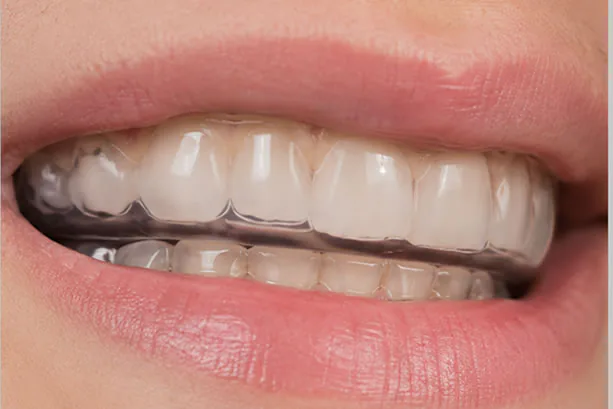
What the stabilization appliance is
The stabilization appliance — sometimes called a joint-protective splint, occlusal stabilization splint, or hard occlusal orthotic — is a thin, custom-fabricated acrylic device that fits precisely over the upper teeth. It is built on a digital or PVS impression of your bite and articulated against the opposing lower arch in centric relation, so that the contact pattern between the teeth is controlled by the appliance rather than by your existing occlusion.
Unlike a generic boil-and-bite night guard or a soft drugstore tray, the stabilization appliance is fabricated in a dental lab with specific contact points, anterior guidance ramps, and a polished bite plane. The result is a device that protects the temporomandibular joint and the surrounding masticatory musculature from the loading forces of nocturnal clenching and bruxism.
Treatment with a stabilization appliance is provided within the scope of general dentistry.
Reviewed by Dr. Yolanda Cruz, DDS · Dr. Yolanda Cruz Dentistry On The Path · Toronto, ON
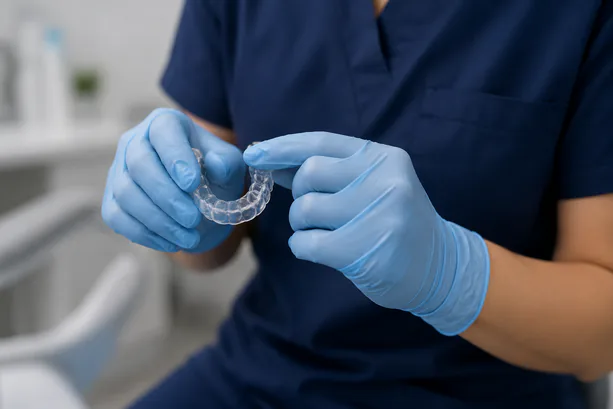
How the appliance decompresses the joint
The key difference between a joint-protective stabilization appliance and an ordinary nightguard lies in its design. The bite surface of the appliance is sculpted with specific ramps — typically positioned just behind the upper front teeth — that gently guide the lower jaw slightly forward when the teeth close together. This forward positioning keeps the posterior part of the jaw joint, the area most commonly inflamed in TMJ/TMD, from being compressed during clenching and grinding.
The appliance is made as thin and comfortable as possible. A space is often carved into the front of the palate to allow the tongue to rest in a healthy position during sleep — relevant when there is a concurrent airway or sleep-disordered-breathing component. The result is a controlled occlusal environment in which the masseter and temporalis muscles can fire without transferring damaging forces into the condyle and articular disc.
Diagnostic data from Joint Vibration Analysis, T-Scan occlusal analysis, and CBCT imaging is used to confirm that the appliance is doing what it is supposed to do — and to refine the contact pattern at each follow-up.
Design, materials, fabrication and fitting
The clinical steps to deliver a stabilization appliance are tightly defined. The lab work and chairside adjustments are what separate a custom appliance from a generic over-the-counter tray.
- Hard acrylic, upper-arch design. The appliance is fabricated from heat-cured or processed hard acrylic — not a soft thermoplastic — because soft materials can paradoxically increase muscle activity in bruxers.
- Anterior guidance ramps. Ramps behind the upper anterior teeth disclude the posterior teeth on excursive movements and guide the mandible slightly forward, decompressing the retrodiscal tissues.
- Even bilateral posterior contacts. In centric relation, all lower posterior teeth contact the appliance evenly — verified with articulating paper and T-Scan occlusal analysis.
- Tongue space & palatal relief. A space is sculpted in the anterior palate so the tongue can rest in a healthy, forward, low-palatal position during sleep.
- Digital scan or PVS impression. The bite record is captured using either an intraoral scanner (such as iTero) or a polyvinyl-siloxane impression.
- Centric relation bite record. A bite registration is taken with the condyles in their anatomically braced position so the lab can mount the case correctly.
- Lab fabrication, 2–3 weeks. The dental lab fabricates the appliance to spec; turnaround is typically two to three weeks.
- Insertion appointment. The appliance is tried in, refined for fit and retention, equilibrated against the opposing arch, and polished.
- Follow-up adjustments. Appliances are re-checked and equilibrated over the following weeks as muscles relax and joint inflammation settles — the bite the day of insertion is rarely the bite four weeks later.
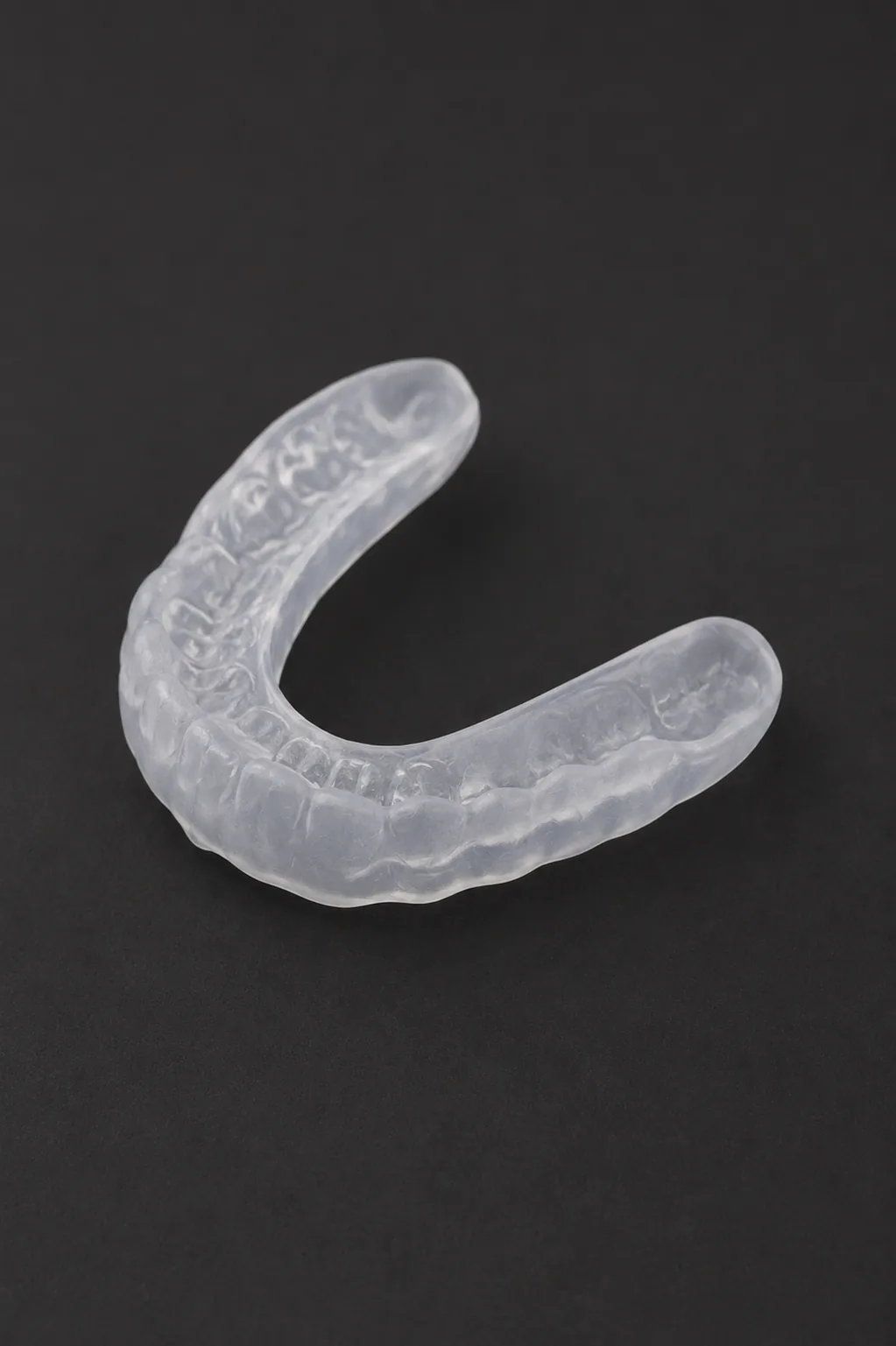
What wearing the appliance feels like
The appliance is worn during sleep. In the first couple of days, it may be helpful to wear it for short periods during the day as well if there is significant discomfort or active flare-up — this is a clinical judgment made at the insertion appointment.
Once the joint inflammation has settled, which is typically signaled by the ability to clench firmly on the appliance without an increase in pain, the appliance continues to be worn at night as a long-term protective and maintenance measure. Over time, once the joint has healed, the orthopedic features of the appliance may be adjusted to support ongoing jaw-muscle health and long-term bite stability.
Most patients tell us the appliance is far less intrusive than they had anticipated. There is a brief adaptation period — usually a few nights — during which the tongue, lips, and salivary glands recalibrate. After that, it becomes part of the bedtime routine. Home-care guidance supports recovery between visits.
Is a stabilization appliance right for you?
A custom stabilization appliance is generally appropriate when one or more of the following are present after a proper clinical evaluation:
- Diagnosed TMJ/TMD with active joint inflammation or pain on loading
- Nocturnal bruxism (teeth grinding) confirmed by a partner report or by clinical signs of wear, fractured cusps, or scalloped tongue
- Clenching during sleep, masseter hypertrophy, or morning jaw fatigue
- Tension-pattern headaches in the temples or behind the eyes that worsen with stress and improve on wake
- A history of clicking or popping, disc displacement, or intermittent locking
- Concurrent occlusal instability — wear facets, mobility, or progressive collapse of the posterior bite
- Adjunctive use during orthopedic TMJ treatment to maintain a stabilized position once it has been achieved
A stabilization appliance may not be the right starting point if the dominant problem is primarily airway-driven sleep apnea (where a mandibular advancement device or CPAP is more appropriate), if there is severe structural joint pathology that needs surgical assessment, or if active periodontal disease must be addressed first. In these cases the plan is sequenced differently.
What the appointments feel like
Most patients tell us the process is more methodical and less invasive than they expect:
- Records appointment — Intraoral scan or PVS impression of upper and lower arches, a centric-relation bite record, photographs, and (when indicated) T-Scan and Joint Vibration Analysis recordings. No drilling, no injections.
- Insertion appointment — The appliance is seated, retention is checked, and the bite is equilibrated with articulating paper and T-Scan until contacts are even. Most patients walk out wearing it that night.
- Follow-up adjustments — Brief visits over 4–12 weeks. As muscles relax and the joint settles, the contact pattern on the appliance changes; we equilibrate it and verify with T-Scan.
- Long-term maintenance — Once the joint has stabilized, the appliance is worn nightly and re-checked at recall visits along with the rest of your dental exam.
What the stabilization appliance does for you
A correctly designed stabilization appliance addresses several problems at once:
Joint decompression
Anterior guidance ramps reposition the mandible slightly forward, reducing posterior loading on the inflamed retrodiscal tissues of the TMJ.
Protection from bruxism
Hard acrylic absorbs the grinding forces that would otherwise fracture cusps, wear enamel, and propagate stress into existing restorations.
Reduced muscle pain
A controlled occlusal contact pattern allows the masseter and temporalis to fire less aggressively overnight — many patients report fewer morning headaches within a few weeks.
Reversible & adjustable
The appliance does not permanently alter your teeth or bite. It is removed during the day, easily adjusted, and discontinued if treatment direction changes.
Bite stability long-term
Once the joint has settled, the appliance maintains a stable occlusal position — useful when a restorative plan or orthopedic treatment is being staged.
Tongue-friendly design
Palatal relief gives the tongue a healthy resting position during sleep, which can support a more open airway and lower nocturnal jaw tension.
Stabilization appliance vs other oral devices
Oral appliances differ widely. The table below positions a true stabilization appliance against the most common alternatives a patient may have already tried — the right device depends on the diagnosis.
| Appliance | Designed for | Adjustable? | Typical fabrication |
|---|---|---|---|
| Stabilization appliance (joint-protective splint) | TMJ/TMD with joint inflammation; bruxism; protective long-term wear | Yes — equilibrated over follow-up visits | Hard acrylic, upper arch, lab-fabricated, custom centric-relation bite record |
| Generic boil-and-bite night guard | Mild grinding with no TMJ involvement | No | Soft thermoplastic, OTC, self-fit at home |
| Mandibular advancement device (MAD) | Mild–moderate obstructive sleep apnea or snoring | Yes — titration over time | Two-piece appliance that holds the mandible forward to open the airway |
| Orthopedic / repositioning orthotic | Active structural orthopedic TMJ treatment | Yes — modified through staged orthopedic phase | Hard acrylic, designed to hold the mandible in a treatment position |
| Soft thermoplastic NTI-style anterior-only device | Migraine prophylaxis in selected cases | Limited | Small anterior-only design; not appropriate as a long-term TMJ stabilizer |
Dr. Cruz's clinical note
"A stabilization appliance is one of the most useful tools I have for a TMJ patient — but only when it is designed for the right reason and adjusted properly over time. Most of the 'failed splints' I see in second opinions are not failures of the concept. They are flat, generic appliances delivered without a centric-relation bite record, never equilibrated, and never re-checked. That is not a stabilization appliance. That is a piece of acrylic."
"When I fabricate one, I want to know exactly where the mandible wants to sit, where the joint is loaded, and where the contacts need to be. T-Scan and Joint Vibration Analysis tell me whether the appliance is doing what I designed it to do — and the bite four weeks after insertion is almost never the bite on day one. That is why follow-up visits matter."
— Dr. Yolanda Cruz, DDS, Dr. Yolanda Cruz Dentistry On The Path, Downtown Toronto
Risks & considerations
- A short adaptation period is normal — the first few nights can feel bulky, lips may feel slightly stretched, and saliva production can be briefly increased
- The bite may feel temporarily different on wake during the first weeks of wear — this is expected as muscles release
- Improperly designed or unadjusted appliances can cause new symptoms, including tooth mobility, occlusal interference, or worsened muscle pain
- An appliance is not a cure for TMJ/TMD — it is a protective and adjunctive component of a broader treatment plan
- Stabilization appliances are not appropriate as the primary treatment for moderate-to-severe obstructive sleep apnea — a different appliance class or CPAP is required
- The appliance requires daily cleaning and periodic professional inspection; cracked, warped, or worn appliances need to be replaced
- Patients with active periodontal disease or unstable restorations may need preparatory work before a stabilization appliance is fabricated
Frequently asked questions about the TMJ stabilization appliance
A TMJ stabilization appliance is a custom, lab-fabricated hard-acrylic device worn over the upper teeth during sleep. It includes specific anterior guidance ramps and an even posterior contact pattern designed against a centric-relation bite record. A drugstore boil-and-bite night guard is a soft thermoplastic tray with no occlusal design — it can cushion mild grinding but does not decompress the TMJ and, in patients with muscle-dominant bruxism, can actually worsen symptoms.
Coverage varies by plan. Many Canadian extended-health and dental plans cover part of a custom occlusal appliance under "occlusal guard" or "TMJ appliance" codes. The records, T-Scan, and Joint Vibration Analysis are typically billed separately. We provide documentation for pre-authorization where possible. The CDCP page outlines what is eligible under the federal plan.
Many patients with muscle-dominant TMD report meaningful improvement within 1–3 weeks of consistent nightly wear. Joint-dominant cases settle on a slower curve — typically 6–12 weeks, with periodic re-equilibration of the appliance. Chronic and arthritic presentations are managed long-term rather than cured, and the appliance is part of an ongoing maintenance plan.
A correctly designed and well-monitored stabilization appliance is reversible — your existing teeth are not altered, and you can stop wearing it. What can shift is your perception of your bite: as the masticatory muscles relax and the joint position becomes more anatomically braced, the bite you wake up to may feel different from the bite you went to sleep with. This is the muscles releasing, not the teeth moving — and it is one of the reasons we re-equilibrate at follow-up visits.
Yes — in most cases. The appliance is fabricated against your current restorations, so existing crowns, bridges, implants, and partials are accommodated in the design. Patients with extensive restorative work often benefit the most from a stabilization appliance because it protects those restorations from the bruxism forces that can crack porcelain or load implant components.
The practice is at 390 Bay St., Concourse Level, Unit C006 — on the PATH at the corner of Bay & Queen, downtown Toronto. The TTC Queen station is one block away and there is underground parking nearby. To book a TMJ consultation, use the appointment request form or call 416-595-5490.
Medical Disclaimer
This content is for informational purposes only and does not constitute dental or medical advice, diagnosis, or treatment. TMJ/TMD disorders have multiple possible causes and treatment outcomes vary by individual. Custom oral appliances require professional fitting and follow-up adjustments; an appliance fabricated without an accurate bite record or worn without follow-up may worsen symptoms in some patients. A stabilization appliance is not a substitute for evaluation of obstructive sleep apnea or for surgical assessment of severe structural TMJ pathology. Consult Dr. Yolanda Cruz or another qualified dental professional regarding your symptoms and treatment options. Individual results may vary.
Ready for a TMJ stabilization appliance consultation in downtown Toronto?
Book a focused TMJ/TMD evaluation with Dr. Cruz. You will leave with a working diagnosis and — if appropriate — a written plan and cost estimate for a custom stabilization appliance.